
Hair Transplant
Is a transplant right for me?
A hair transplant moves existing hair; it doesn't create new follicles. Results depend on having enough healthy donor hair, and on your hair loss being at a stage where a plan can be made with confidence.
You may be a suitable candidate if:
- Your hair loss has been diagnosed as pattern hair loss, or another type that responds to transplantation
- You have enough donor hair at the back and sides of your scalp
- Your hair loss has been relatively stable
- You have realistic expectations about density and timing
A transplant may not be the right first step if:
- Your hair loss is recent or rapid, or its cause hasn't been confirmed/span>
- You're younger and your pattern of hair loss hasn't yet settled
- You have an active condition such as alopecia areata or scarring alopecia
- Your donor area is limited
A transplant also doesn't stop pattern hair loss in the rest of your hair. Many patients use medical treatment alongside it to help protect their existing hair, and your doctor will discuss this with you.
Patient Journey
A hair transplant is a considered decision. Here's what the process looks like, from your first conversation to your final review.
-
Consultation
Start with an initial consultation with our doctors in person at our Macquarie Street clinic or online. We'll talk through your hair loss history, your goals and what's realistically achievable.
-
Doctor assessment and treatment plan
A doctor assesses your scalp, your donor area and the likely cause of your hair loss. If a transplant is suitable, you'll receive a written plan covering the estimated number of grafts, cost, risks and expected timeline. If it isn't, we'll explain why and discuss other options.
-
Time to decide
There's no pressure to book on the day. You'll have time to consider your plan and ask questions before committing.
-
Procedure day
Transplants are performed under local anaesthetic as a day procedure, usually taking 8 to 12 hours. You're awake throughout and can take breaks.
- Anaesthesia
The recipient area is numbed completely with local anaesthetic, ensuring the patient feels at ease from start to finish.
- Extraction
The hairs on your scalp have their own ‘follicular unit’ which is composed of one to four hairs with various key components allowing it to survive.
During extraction, a micro-punch device punctures the skin around the follicle, about one to two millimetres from the surface. Then, each unit or graft is individually extracted. The device separates surrounding tissue from the unit, minimising trauma to the surrounding areas.
A powerful magnifying glass is used to ensure precise outcomes. This method allows the follicles to be removed without leaving a linear scalp scar.
- Implantation
Follicles are counted and grouped based on the number of hairs contained. In using the correct graft type in the correct area of the scalp, we’re able to create the most authentic-looking results possible.
Once follicles have been selected, they are manually implanted into the targeted area of the scalp. An implanter tool gently penetrates the skin, so the follicle can be placed just one millimetre below the surface. Only tiny incisions are made in the scalp to minimise obvious scarring.
Our team has undergone rigorous training to perfect the procedure and work tirelessly to ensure follicles remain healthy and viable, ready for implantation.
- Anaesthesia
-
Aftercare
Results from a hair transplant take time, and the early stages can be unsettling if you don't know what to expect. This is a typical timeline, although everyone heals differently.
- Days 1 to 7
Redness, small scabs around each graft and some swelling, which can spread to the forehead.
- Weeks 2 to 8
Most transplanted hairs fall out. This is a normal part of the process: the follicles stay in place and enter a resting phase. Some nearby hair may also shed temporarily.
- Months 3 to 4
New hair starts to grow, often fine at first.
- Months 6 to 9
Growth thickens and becomes more noticeable.
- Months 12 to 18
Your final result. The crown usually taking a full 18 months.
- Days 1 to 7
-
Aftercare and follow-up
You'll go home with written aftercare instructions and a direct contact for questions. We review you at [X weeks, X months and 12 months] to check your healing and progress.
FAQ
Does it hurt?
- The procedure is done under local anaesthetic, so once the area is numb you should feel pressure rather than pain. The anaesthetic injections themselves can be uncomfortable. Tenderness and tightness are common for a few days afterwards, and we'll advise you on pain relief.
How much time off work will I need?
- Many people take four days to two weeks off, depending on their job and how comfortable they are with visible healing. Exercise, heavy lifting and physical work need to be avoided for longer, usually around two weeks. Your aftercare instructions set out exactly what to avoid and for how long.
Is the result permanent?
- Hair is usually taken from the back and sides of the scalp, where follicles are generally resistant to pattern hair loss, and transplanted hair tends to keep that resistance. Your existing hair can still continue to thin, which can change how your result looks over time. That's why ongoing medical treatment is often recommended.
Will it look natural?
- Your doctor designs the hairline and graft placement to suit your face, age and hair characteristics, and grafts are placed at angles that follow your natural growth direction. Results vary between patients, and your doctor will talk you through what's realistic for you.
Androgenetic alopecia affects a majority of men by age 50. FUE is one of several treatment options.
Whether you’re dealing with a receding hairline or a thinning crown, our FUE hair transplant service offers one of several treatment options.
How FUE hair transplantation works
FUE involves extracting healthy hair follicles from a donor area (the back and sides of the head) and grafting them onto thinning or bald areas. These may include your beard, eyebrows, hairline or other areas of concern on the scalp. Follicles are taken using an extraction instrument less than 1 mm in diameter and implanted by our skilled medical team.
Our team carefully implants the hairs at the right angle, replicating the way your original hair grows.
Who can benefit from FUE?
An FUE hair transplant may be suitable if you:
- Experience pattern baldness or thinning
- Seek less discomfort and downtime post-procedure
- Are concerned about visible scarring
- Prefer a procedure with minimal activity restrictions
How it works
The recipient area is numbed completely with local anaesthetic, ensuring the patient feels at ease from start to finish.
The hairs on your scalp have their own ‘follicular unit’ which is composed of one to four hairs with various key components allowing it to survive.
During extraction, a micro-punch device punctures the skin around the follicle, about one to two millimetres from the surface. Then, each unit or graft is individually extracted. The device separates surrounding tissue from the unit, minimising trauma to the surrounding areas.
A powerful magnifying glass is used to ensure precise outcomes. This method allows the follicles to be removed without leaving a linear scalp scar.
Follicles are counted and grouped based on the number of hairs contained. In using the correct graft type in the correct area of the scalp, we’re able to create the most authentic-looking results possible.
Once follicles have been selected, they are manually implanted into the targeted area of the scalp. An implanter tool gently penetrates the skin, so the follicle can be placed just one millimetre below the surface. Only tiny incisions are made in the scalp to minimise obvious scarring.
Our team has undergone rigorous training to perfect the procedure and work tirelessly to ensure follicles remain healthy and viable ready for implantation.
Hair transplant procedures are a long journey to recovery. It’s a commitment, but the results are worth it.
- 7 to 10 days post-procedure: Kick back and relax! Give your body the time it needs to recover. Scabs will be fully healed after day 10.
- Months 1-3: The ugly duckling phase, hair will be shedding and regrowing at different rates. It’s typically a challenging time, but we’re here to support you throughout.
- Months 3-6: Start of regrowth, you’ll start to notice new areas of growth, and whilst slow, an encouraging sign of things to come.
- Months 6-12: When the magic starts to happen, you’ll slowly see more growth and density in treatment areas.
- Months 18+: Full result including the crown area would have now come through.
It is written for anyone considering these procedures, including people who have not yet booked a consultation. It is general information and does not replace a clinical consultation with a registered medical practitioner.
Your individual risks depend on your health, your hair loss pattern, and factors specific to you, and will be discussed with you directly before any decision is made.
Hair transplantation is classified by AHPRA as a higher-risk non-surgical cosmetic procedure. It involves incisions, local anaesthetic, and a recovery period. It is a medical procedure and carries genuine risks.
The benefits of FUE hair transplants

Fuller thicker hair
The precise harvesting technique reduces trauma to your follicles, promoting the growth of healthier strands as you recover.

Minimal discomfort and scarring
FUE doesn't require stitches or result in linear scarring. It leaves tiny, dot-like scars that are typically barely noticeable, especially with a number two haircut or longer.

Affordable and convenient
We offer cost-effective procedures, with pricing based on hair loss level and grafts needed. At Elite Hair Clinic, we offer competitive rates and flexible payment plans, making your hair goals affordable and stress-free.

Swift recovery
Typically, patients can engage in light activities within a week and resume their regular activities within a month.
FUE vs FUT: What’s the difference?
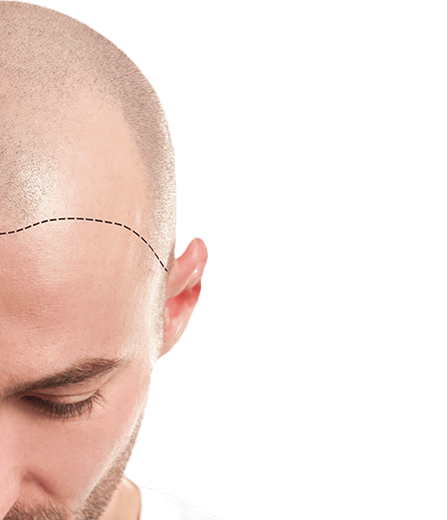
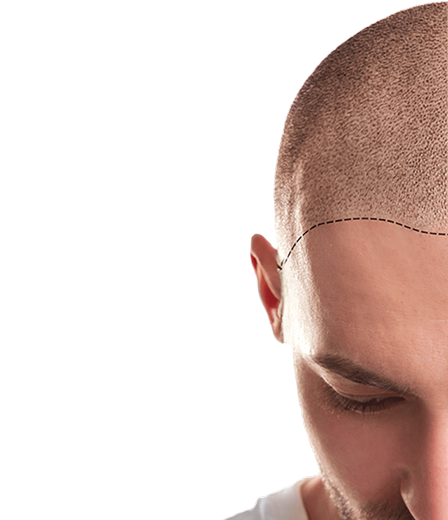
Follicular Unit Transplantation (FUT), also known as the strip method, is the traditional way to transplant and regrow hair.
Here’s how it works: first, a strip of scalp is surgically removed and stitched up. Then, the doctor separates that strip into smaller pieces, or grafts, containing hair follicles. Using a needle or blade and a microscope, the doctor makes small holes in the scalp where the grafts are inserted. Finally, the surgical site is covered with bandages.
In FUE, follicular units are individually extracted, resulting in punctiform scars that are less noticeable than a linear scar. Additionally, the absence of stitches allows for faster healing of all incisions.